What do the chambers in PVC profiles actually mean, and how do they affect thermal insulation?
Date: January 21, 2026
When choosing windows for a home, one of the most frequently mentioned and least understood concepts is that of chambers in PVC profiles. They are often associated only with “higher quality” or “better insulation,” but what do they really mean and how do they influence the thermal performance of a window?
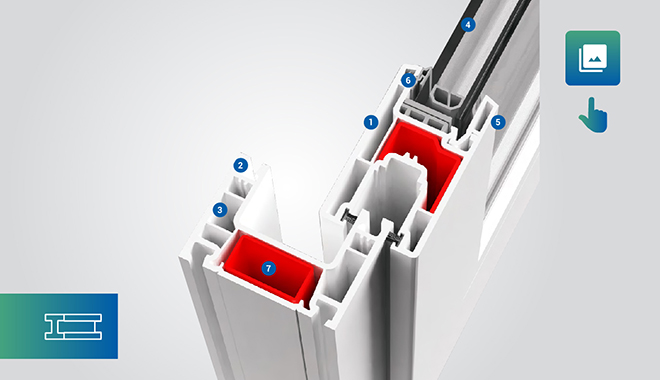
What are chambers in a PVC profile?
Chambers are the internal hollow spaces found inside the PVC profile. Unlike a maximum strength profile, these compartments are specifically designed to improve the insulation and structure of the window.
Each chamber acts as a protective barrier, as the air trapped inside reduces heat transfer between the outside and inside of the home.
In PVC profiles, the chambers:
Do more cavities mean better insulation?
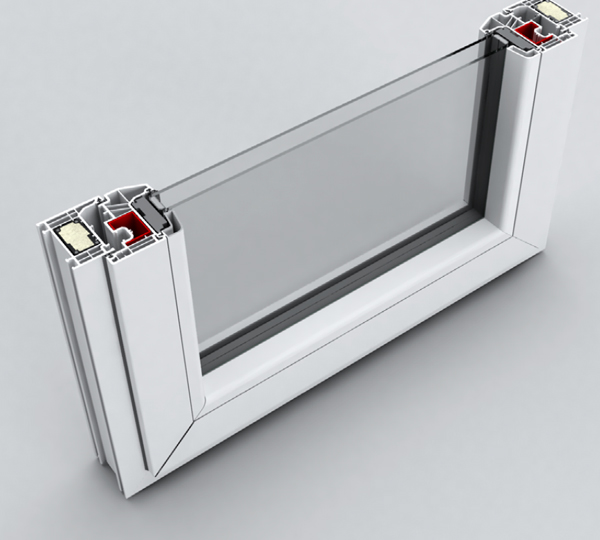
Generally speaking, a greater number of cavities improves thermal insulation, but it is not the only factor to consider. The final performance depends on a combination of elements:
For example, a well-designed 5- or 6-pane profile can offer much better insulation performance than a 3-pane profile, especially in climates with extreme temperatures.
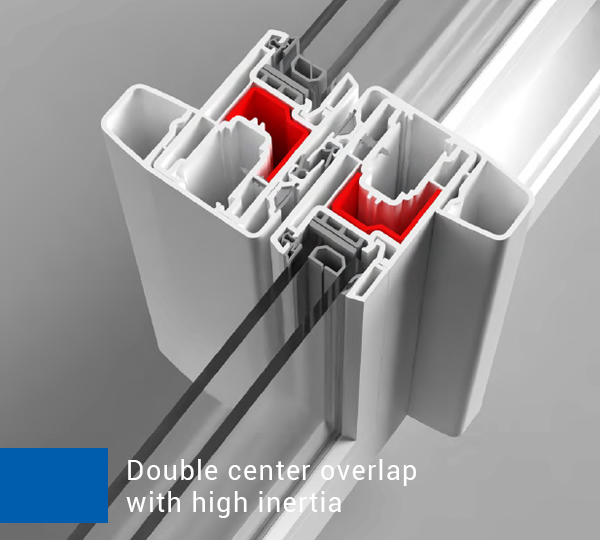
Chambers and structural stability
In addition to insulation, chambers also serve a structural function. They allow steel reinforcements to be integrated when necessary, maintaining the rigidity of the profile without sacrificing insulation.
Combination with suitable glass
To achieve high performance, the profile chambers must be complemented with quality glass, such as double or triple glazing. The window functions as a complete system, where each component influences the final result.
Choosing multi-chamber PVC profiles means opting for a construction solution designed to withstand both the heat of summer and the cold of winter, improving the temperature regulation of the home in the long term.



 Manufacturer